
The Blueprint for Success: Why Engineered, Permit-Ready Plans Are Non-Negotiable
When you decide to build a custom home—especially a specialized structure like a barndominium or a custom timber-frame build—the excitement usually starts with the floor plan. You imagine the flow of the kitchen, the height of the vaulted ceilings, and the view from the porch. However, there is a massive gap between a beautiful floor plan and a legal building set. If you want to move from "dreaming" to "dirt moving," you need more than a sketch. You need engineered, permit-ready plans. Here is why this technical phase is the most critical investment in your construction journey.
Buckeye Plans
4/13/20262 min read
What Exactly Are "Permit-Ready" Plans?
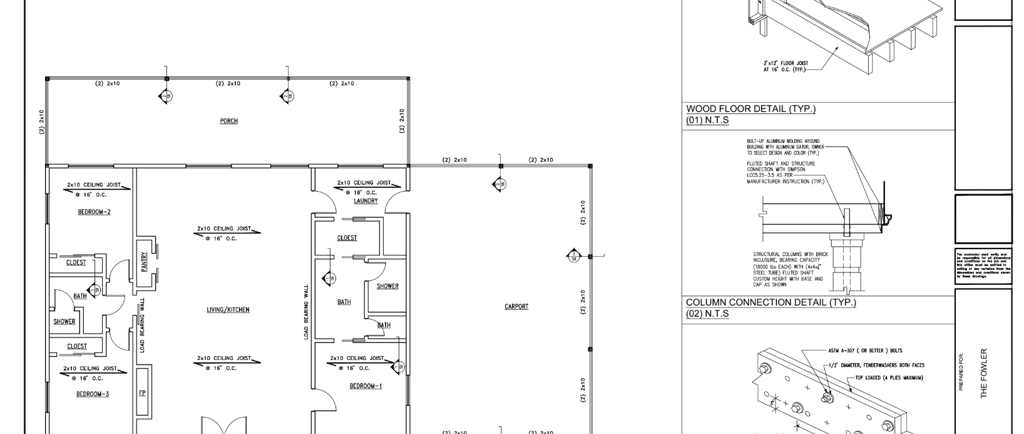
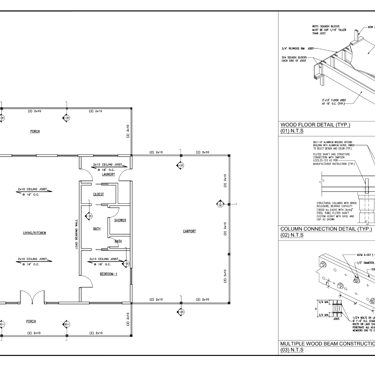
Many homeowners make the mistake of thinking a set of architectural drawings is all they need to get a building permit. In reality, your local building department is less interested in your paint colors and more interested in structural integrity.
Permit-ready plans are a comprehensive set of documents that include:
Architectural Details: The "what" and "where" of the design.
Structural Engineering: The "how" it stays standing.
Calculations: Mathematical proof that the beams, headers, and foundation can handle local wind, snow, and seismic loads.
The Power of the "Signed and Sealed" Stamp
In most jurisdictions across OH, PA, KY, IN, and WV, a building official will not even look at your application unless the plans carry the professional seal of a licensed structural engineer.
This stamp is more than just paperwork; it is a legal guarantee. It tells the county that a professional has calculated every load path in your home—from the peak of the roof down to the anchor bolts in the foundation. Without this, your project is dead in the water before it begins.
Engineering for Your Specific Dirt
One of the biggest risks in custom building is using "stock" plans. A roof designed for the snow loads of northern Pennsylvania is overkill for Kentucky, but a foundation designed for Kentucky’s soil might fail in the clay-heavy regions of Ohio.
True engineered plans are site-specific. During the engineering phase, your designer and engineer review:
Soil Conditions: Ensuring the foundation (slab-on-grade or crawlspace) won't crack or shift.
Wind & Snow Loads: Calculating the exact thickness of your trusses and the spacing of your wall studs.
Lateral Stability: Designing shear walls and bracing so your home stays rigid during high winds.
Saving Money by Spending on Engineering
It sounds counterintuitive, but spending $7,500 to $10,000 on a professional engineering package can save you tens of thousands during construction.
No Over-Building: Without engineering, contractors often "guess" at beam sizes. To be safe, they over-spec, meaning you spend thousands extra on steel or lumber you didn't actually need.
No Field Corrections: There is nothing more expensive than a building inspector stopping work mid-frame because a header is undersized. Fixing mistakes in the field costs 5x more than fixing them on paper.
Accurate Bidding: When you hand a contractor a permit-ready set, they can give you a "hard bid" because they know exactly what materials are required. No "surprises" means no change orders.
How the Process Works
At Buckeye Barndominium Design, we bridge the gap between vision and reality. The process typically looks like this:
The Design Session: We create your custom floor plan live (often in our Mobile Drafting Studio).
The Deposit: A $5,000 deposit secures your spot in our engineering schedule.
The Technical Deep-Dive: Our engineers review the architecture, calculate the loads, and design the structural "skeleton."
Delivery: You receive a full PDF plan set, signed and sealed, ready to be uploaded to your local building department.
Final Thoughts
Your home is likely the largest investment you will ever make. Don’t build it on a "guess." Investing in engineered, permit-ready plans ensures that your home isn't just beautiful on the day you move in—it’s safe, legal, and structurally sound for a lifetime.